
## Putin's Oil Gambit: How the Middle East War is Secretly Boosting Russia’s Economy
For months, the narrative surrounding the war in Ukraine has centered on crippling sanctions and a struggling Russian economy. However, a less publicized, yet increasingly significant, development is unfolding: Vladimir Putin is leveraging the chaos in the Middle East to salvage his economic fortunes. As the conflict between Iran and Israel intensifies, and the threat of a wider regional war looms, Russia has quietly engineered a remarkable turnaround in its energy sector, defying Western expectations and potentially reshaping the global oil market.
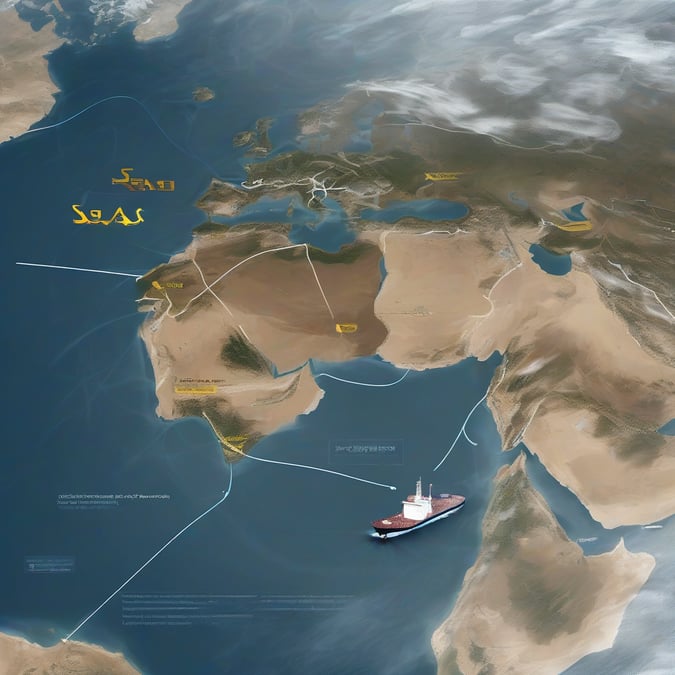
The story begins with a seemingly innocuous incident involving a chemical tanker named the Sarah. In early February, this 20-year-old Hong Kong-flagged vessel, carrying Russian crude oil, temporarily disabled its transponder to discreetly offload three cargoes to smaller Russian tankers off the coast of Oman. The plan was to then transport the oil to Singapore, where it would likely be transferred to a ‘ghost ship’ – a vessel without a legitimate flag or registration – bound for China. However, on March 6th, just a day after the United States issued a 30-day exemption allowing Indian refiners to purchase Russian crude, the Sarah dramatically altered its course. It is now headed to a refinery in Western India, a stark illustration of the shifting dynamics at play.
This sudden shift mirrors a broader transformation within Russia’s energy industry. The closure of the Strait of Hormuz, a critical chokepoint for global oil shipments, has effectively trapped approximately 15% of the world’s oil supply in the Persian Gulf. This disruption sent Brent crude, the global benchmark, plummeting to a five-year low of $59 per barrel in December. Industry analysts predicted a ‘super-supply surplus,’ anticipating a significant price decline. Yet, remarkably, Brent has since rebounded to around $100 per barrel – a level not seen since the invasion of Ukraine. This price surge, coupled with strategic rerouting, has provided a desperately needed lifeline for the Russian economy.
**The Sanctions Shuffle and the Rise of ‘Ghost Ships’**
Prior to the conflict with Iran, Russia’s oil revenues and the broader economy appeared to be on a downward trajectory. Many of Russia’s key customers in India and China had begun to reduce their purchases around November, preceding the implementation of US sanctions targeting Rosneft and Lukoil, its two largest producers. In February, export volumes plummeted by a quarter, and the Kremlin’s oil and gas revenues were 44% lower than the previous year. The resulting budget deficit reached a staggering 3.4 trillion rubles – nearly nine tenths of the projected 2026 deficit.
However, the recent US exemption, coupled with the strategic use of ‘ghost ships’ – vessels operating without proper registration, often used to obscure the origin of the oil – has dramatically altered the landscape. On March 12th, the Trump administration extended the exemption, allowing all countries to purchase Russian oil already loaded onto tankers. This move, largely seen as a politically motivated concession, has been met with criticism from some in the West, but it has undeniably provided a crucial boost to Russia’s export capabilities.
**China’s Growing Appetite and the ‘Price of Activation’**
China’s role in this unfolding narrative is particularly significant. India has already increased its purchases of Russian oil by approximately 50%, contributing to a reduction in Russia’s oil stockpiles at sea by over 10%, bringing them down to 122 million barrels. Chinese imports have also risen, driven by the country’s growing need for energy and its desire to maintain a strategic partnership with Russia. This shift is benefiting traders more than Russian finances, as the oil has already been sold.
Furthermore, Russia is utilizing the ‘price of activation’ – a mechanism allowing buyers, particularly in China, to pay for deliveries up to two months after the shipment date – to further leverage the situation. This delay allows buyers to secure liquidity by selling the oil before finalizing payment, effectively driving up the price. Refineries in China, known as ‘teapot’ refineries, are particularly adept at exploiting this dynamic, often facing difficulties in meeting the margin requirements demanded by suppliers, giving them the leverage to negotiate higher prices.
**A Potential ‘Second 2022 Gain’**
According to Robin Brooks, a senior fellow at the Brookings Institution, the rising Brent price presents a significant opportunity for Russia. If the Strait of Hormuz remains closed for an extended period, Russia could potentially achieve another “unexpected gain” reminiscent of 2022 – a windfall sufficient to offset the $300 billion in frozen reserves seized by Western nations. Estimates suggest that each $10 increase in the Brent price over a month boosts Russia’s energy exports by 2.8 billion dollars, with approximately 1.6 billion flowing directly to the Kremlin.
**Looking Ahead: A Fragile Recovery?**
While the current situation appears to be benefiting Russia, the long-term outlook remains uncertain. The ongoing attacks on Russian oil infrastructure by Ukraine are disrupting production and forcing companies to divert capital from new investments towards repairs. Western sanctions, coupled with a declining production capacity and a voracious domestic economy, are likely to limit Russia’s ability to significantly increase its output in the coming years. The potential for a prolonged conflict in the Middle East, coupled with the risk of a Brent price surge exceeding $150 per barrel, could ultimately undermine Russia’s gains. The Kremlin’s ability to sustain this economic recovery hinges on the duration and intensity of the conflict in the Middle East and the continued effectiveness of Western sanctions.
Ultimately, Russia’s current success is a temporary reprieve, a ‘sugar rush’ that may not address its fundamental economic challenges. The war in Ukraine has inflicted lasting damage, and the long-term consequences of sanctions and reduced investment will undoubtedly weigh heavily on the Russian economy. The strategic maneuvering in the Middle East, however, has provided a crucial window of opportunity, allowing Putin to temporarily stave off economic collapse and maintain his war effort – for now.